Sunday, April 4, 2010

Colourful


A howling wolf on an amathyst.
From Canada.

Thursday, April 1, 2010

Getting Cross over a Cross

At a rather interesting lecture this afternoon, hold by dr. M. Spiering at the University of Amsterdam, we were provided with a hilarious pun. As is often the case with the English language.

Let me give a short background story:
It was a short lecture on the 2000 years of British history. Dr. Spiering gave us the highligts of the British past, dividing it into a Celtic period (before 50 BC), a Roman period (50 BC - 500 AD), an Anglo-Saxon period (500-700), an Anglo-Saxon and Nordic period (700-1066) and the Anglo-Norman period.

He tried to give us a clear explanation of how the United Kingdom of Great Britain and Northern Ireland came into being. Next to that he explained how the nation's flag, the Union Jack, came into being.

And exactly this last part I would like to repeat.

For a long time, England, Scotland, Wales and Ireland were seperate entities. England has always been the most dominant kingdom in Britain, and this was once again proven in 1563 when King Edward I annexed Wales and forged a Union between the two. The last prince of Wales was murdered and King Edward I gave this title to his eldest son. Ever since then the monarch's eldest son would wear the title of Prince of Wales. The flag of Wales, which contains a dragon, has never been shown on the flag of England.


The Flag of Wales - the red dragon was the emblem of Owen Glendower


The case was different in 1603. Queen Elizabeth I had died without issue and the next in line for the throne was King James VI of Scotland. This forged a natural Union between the two kingdoms and the merger lead to the new title of King of Great Britian, since all of the island Britain was in the hands of one monarach.

It also lead to a merger of the flags of Scotland and of England. The first Union flag appeared in 1606.


The Flag of England - the Cross of St. George


The Flag of Scotland - The Cross of St. Andrews


These two flags resulted in the first Union Jack, as shown below.


It is starting to become fairly similar to the Union Jack that is used today. It needs only one more element and that is the flag of the Irish.

The case of Ireland is more complex. In 1169 the Anglo-colonists invaded Ireland, in 1175 King Henry II declared himself Lord of Ireland and in 1541 King Henry VIII declared himself King of Ireland. Next to that a parliament was started in 1297 (in both England as in Ireland, but in Ireland only the Anglo-Irish were represented, the natives were kept out). In the end of the eighteenth century the Irish patriots sought military support of revolutionary France. In a reaction the British government forced the merger of the Irish and British parliaments, creating the United Kingdom of Great Britian and Ireland.

Once again the flag was changed and the Irish cross of St. Patrick was added to the Union Jack.


Saint Patrick's Cross, the patron saint of Ireland.

Resulting in 1801 in


The Union Jack!

However, the Scots were not pleased. They were far from pleased, actually. Just like the last merger of flags, the English flag was put on top of the Scottish flag and now the Irish emblem was put (below the English flag, but over) the Scottish flag.

In other words: The Scots were cross over the obscurity of their cross!

Eventually they decided to countercharge the crosses of St. Andrew and St. Patrick, as you can see, the flag is not symmetric.


Monday, March 22, 2010

Too Much Data


Studying for Exams.

Sunday, March 21, 2010

Splash, Splash, Splash!


The Terrace in our Garden

If it had been colder that day it would have been snow on the ground and not water. The rain was pouring out of the sky for hours, making it impossible for the natural draining system to absorb everyting, hence the enormous amount of water on the ground. Splash, splash, splash!

Friday, March 19, 2010

A Tribute to a Long Winter

Winterberg, Germany.

Yes, yes, I've been complaining like everyone about the cold and snow, but that doesn't mean I can't appreciate a beautiful snowy picture. It was taken when I went skiing in Germany, only a few weeks ago.

The Loss of a Lifetime


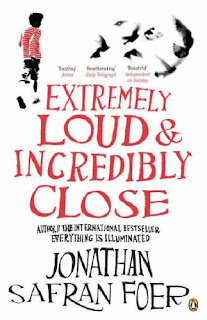
It was beyond anything I had ever read. It was not the story that was based on the biggest tragedy of the twenty-first century or the characters whom were all very convincing, no it was the style of this book, this story of a lifetime.

Literally the story of a lifetime.

The whole concept of a book is the endless pages filled with letters, words, sentences carrying the story off the page into the real world, bringing it alive before our very eyes. This book was different. It was alive, it was like a journal. Emotion poured into every corner of every page, colours blinding your sight, pages with nothing on it but single sentences, 'I'm sorry' and 'Do you know what time it is?', or even an entirely empty page. Some page were covered by one single picture, though most pages did contain the actual story. But even some of those pages had a different lay-out that the average John or Jane is used to.

Some of those pages
were written
like this.
And sometimes the letters were
so close together
that it was almost impossible to understand.
Some pages consisted of nothing but
scribbles of people testing their pen before buying it.

Does this ring any bells yet?

I'm talking about Jonathan Safran Foer's 'Extremely Loud & Incredibly Close'

Oskar Schell lost his father when the Twin Towers fell and he is still trying to come to terms with his death. The story actually revolves around Oskar's father and the impact he had on several lifes, though he is never named as the cause of the changes the people around him made.

The odd lay-out of this book doesn't come in the way of the story, it makes the story (which is to be honest not that extraordinary in concept) better, more interesting, and you are amazed every time you turn the page.

The writing style in itself is fluent, obviously American (Oskar is a nine-year-old New Yorker) and funny.

I intend to read more books written by Safran Foer and now? It is your turn by starting to read this one. Enjoy!

Saturday, September 5, 2009

Heartace Remedy


How to ease the pain of a break-up? With women, it's quite simple: go shopping! There's nothing that makes you feel better than to come home with a new pair of jeans, two pairs of shoes, a couple of earrings and a necklace. To spent money lavishly. To bury yourself in the excitement of entering a store, putting something on that's new and diferent and to feel satisfied when you pay your new items at the cash register. And it helps.

Not.

Heartace can't be solved by shopping or any of the stereo-typical things that are always portrayed in movies and books. It does take your mind off of your pain, but when you come home, you won't feel different. Maybe a bit ashamed about the money you spent, but other than that you're in the same hell as you had been before. Crying your eyes out reliefs you of some stress, but it is truly horrible to be walking around with watery eyes.

The only way to cure you from the pain is through time. It is the simple truth and a very painful one. Who doesn't wish, when you're lying in your bed, having very vivid images of your lover in your head and feeling your heart yearn with desire and love, to have those feelings be ripped out of you? To have the pain stopped. To make the hole in your chest whole again, not broken, preferbably not even bruised, but one piece again. The one and only way to fulfill that wish is through time. Accept the heartace you've got, work with it, break down occasionally if you must, but don't force your way out of the pain. It is okay to drown in your feelings sometimes, talk to some one who can comfort you, make them listen to you for once.

I'm not expert at these kind of subjects. I'm just getting started, really. But there's one thing I do know. If you don't give your heart time to heal, if you lock it in a box. It will break free and come back for you in the end. And then you're in real trouble.